

Tell your Story.
The Film LAB for Geographers and Explorers was a practical RGS session led by Huw James, designed to help expedition teams turn fieldwork into clear, purposeful stories.
The session explored how to find a strong story angle, define an audience, shape a narrative arc, and plan the photography, film, interviews, sounds, and field notes needed to tell that story well.
The focus was simple: not just collecting material in the field, but collecting the right material so an expedition story can travel beyond the expedition itself.

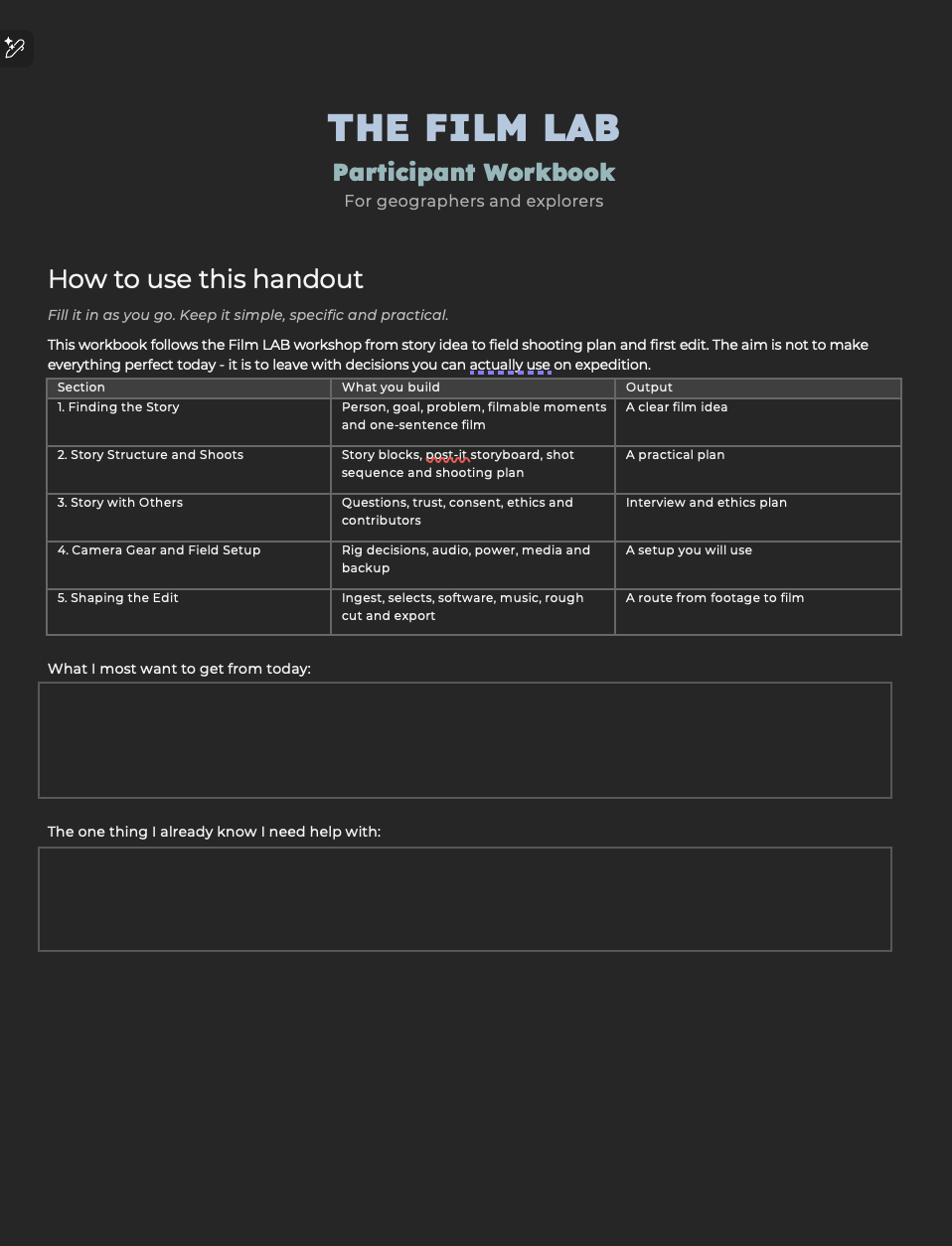
Worksheets.
Download the Worksheets here:
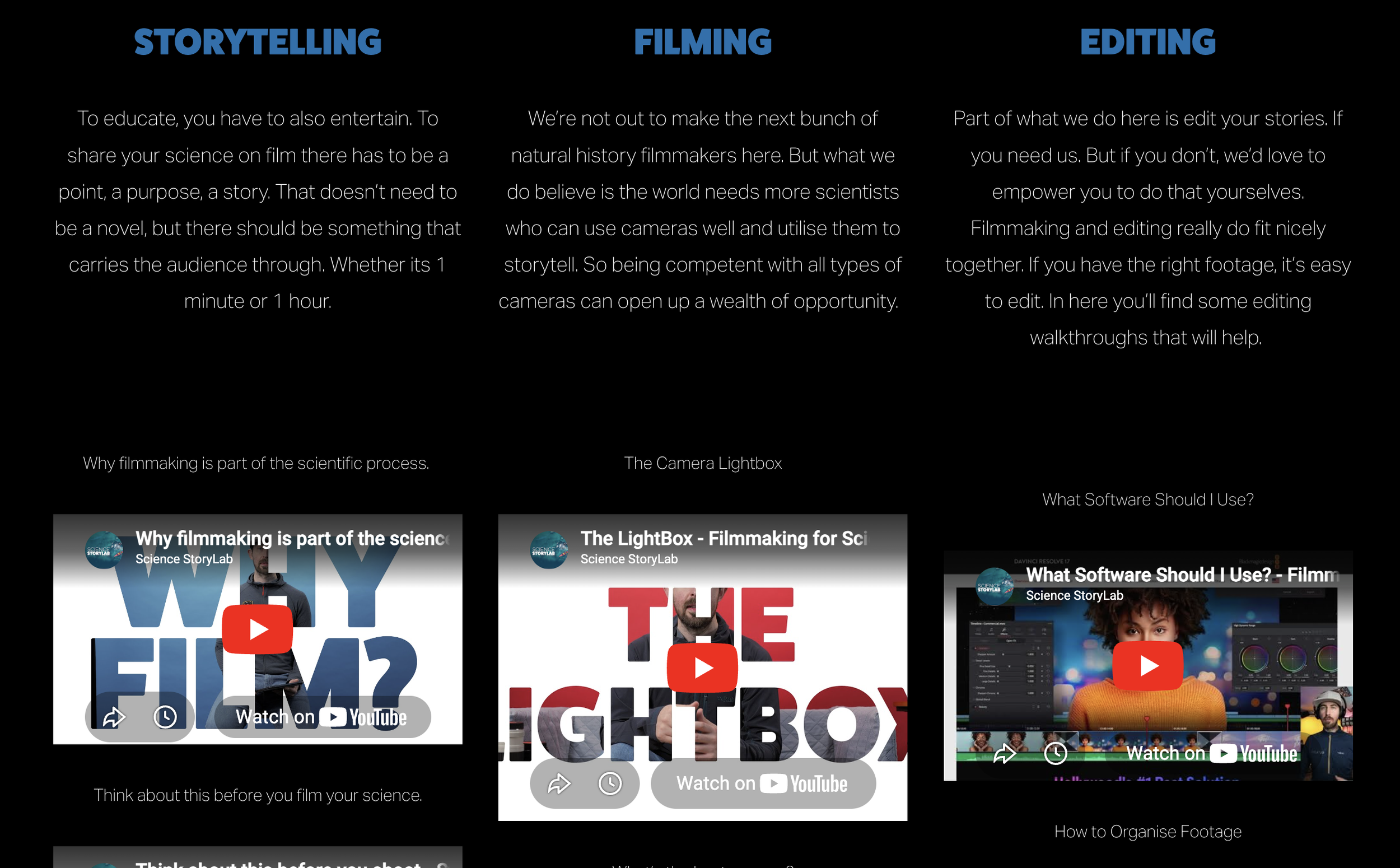
More Training.
Top things to remember from The Film LAB
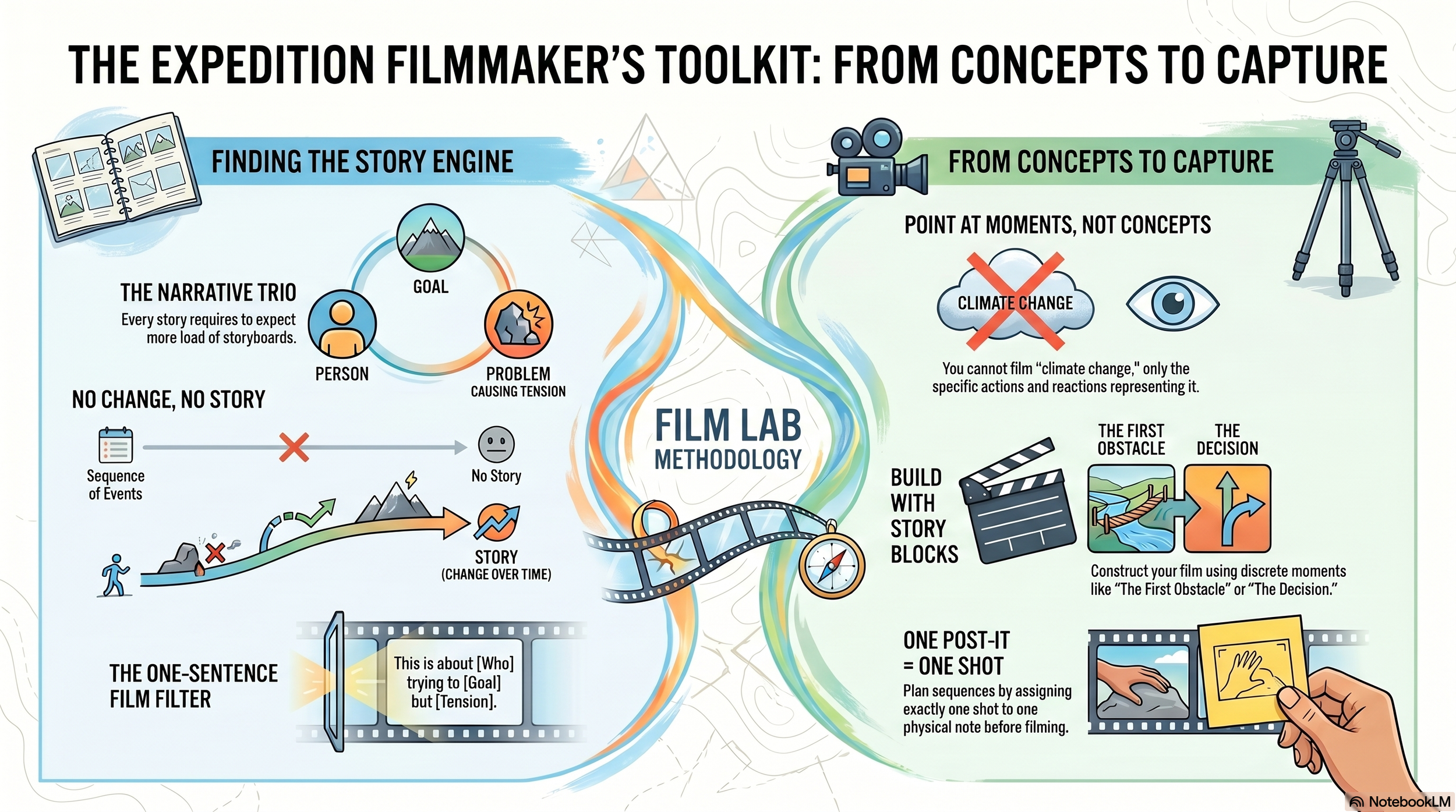
A film is not just a record of what happened. It needs change over time. No change, no story.
You can only tell the story you can capture. Big ideas like climate change, exploration, or biodiversity loss need to become visible moments, actions, decisions, reactions, and scenes.
A strong film usually needs three things: a person, a goal, and a problem. Someone is trying to do something, but something gets in the way.
If you cannot point a camera at it, it is not your film yet. Find the version of the idea that can actually happen in front of the lens.
Build your film from moments, not concepts. A film is made from story blocks: arriving, setting up, failing, reacting, deciding, reflecting, and changing.
Do not film everything and hope to fix it later. Select what matters before you start filming. If it is not on your shot list, you probably will not film it.
Think in sequences. Use wide, mid, close, and detail shots so the audience understands where they are, what is happening, what matters, and what it feels like.
Plan your shots as must-have, nice-to-have, and bonus. This helps your plan survive bad weather, limited time, access problems, tiredness, and real expedition conditions.
Good interviews are about usable moments, not just answers. Ask specific questions that bring out context, personal connection, challenge, meaning, and reflection.
Trust comes before good answers. People need to feel comfortable before they say something real. Better trust means better interviews.
Ethics matter. Think about consent, representation, context, and power. Just because you can film something does not mean you should.
Good films come from good decisions, not expensive gear. Balance weight, quality, and reliability. The best setup is the one you will still use at the end of a long day.
Audio matters more than people think. Get the microphone close. Clear sound makes a film feel intentional. Poor sound makes it feel accidental.
The edit starts before you open the software. Organise footage, label files clearly, back up properly, and make future-you’s life easier.
Start by selecting, not editing. Sort footage into strong moments, supporting material, and material to cut. You do not need to use everything you filmed.
Build the structure first. Beginning, middle, end. Get a rough version down before trying to make it polished.
Be willing to cut good footage. If it does not serve the story, it goes.
You do not find your film in the edit. You build it from the decisions you already made: plan simply, shoot deliberately, and edit honestly.

Changing Peoples Minds
